When I started my journey into Rosicrucianism, I was made familiar with the concept of the terror of the threshold. It was brought up in the Neophyte degrees, as a warning that crossing the threshold into the inner chambers of the Order would be terrifying. A Dweller at the Threshold, or sometimes a Guardian of the Threshold would be there waiting for us, attempting to convince us not to proceed.
In modern Rosicrucian orders, this guardian is one of many roles played out in elaborate scripted rituals intended to create an atmosphere of magic for the postulant. The script requires the guardian to yield to the postulant; otherwise the ritual would end, and the postulant would not be admitted into the given grade.
However, because my own experience with Rosicrucianism has not yet involved a Temple or Lodge, and solely happens in my own private home sanctum, my understanding of thresholds as a concept has not had the benefit of elaborate plays and group study. Despite learning the material and advancing in the degrees, I had not internalized the importance of knowingly moving into another place.
As is always the case, what needs to be understood is understood, at the right time, and in the right place.
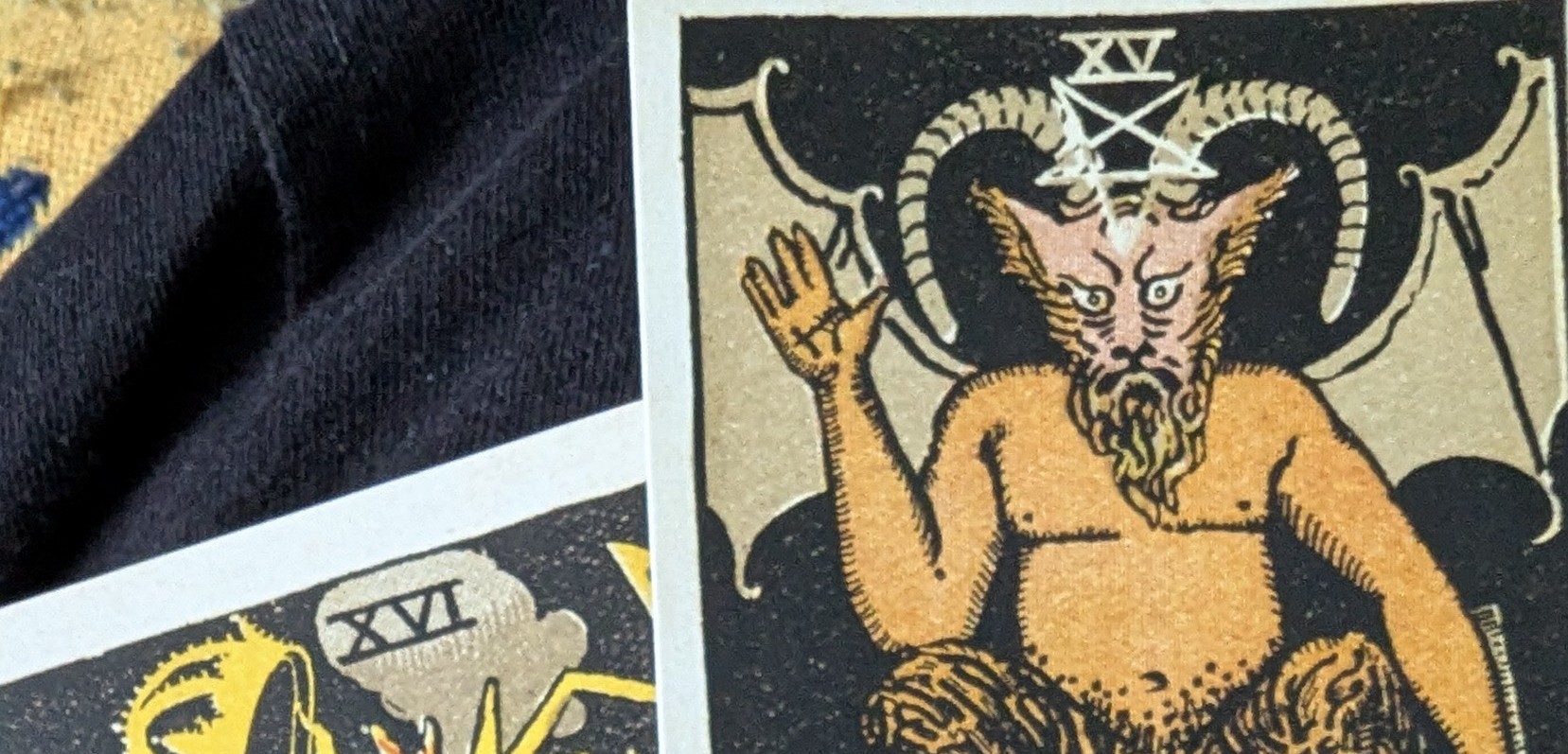
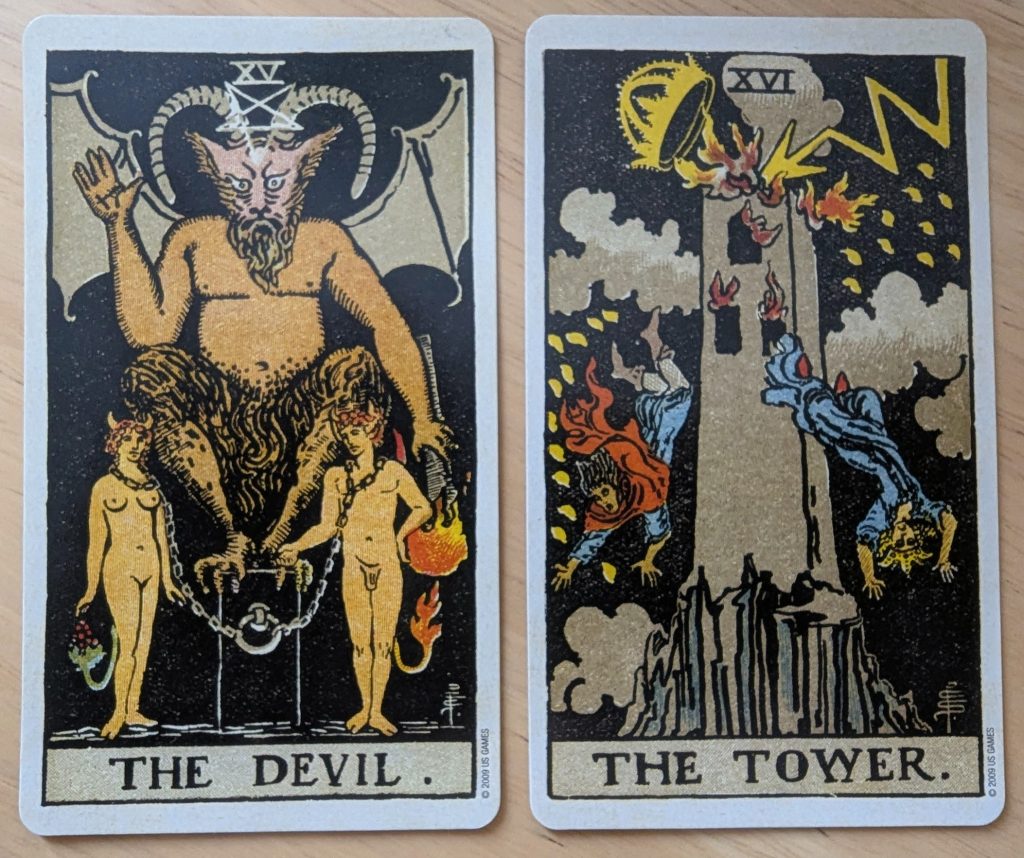
The Devil (tarot key #15) is a divisive card. A terrifying and hulking monster holds in bondage a naked man and woman. They are surrounded in darkness. This is followed by tarot key #16, The Tower. Lightening strikes a tower in the dead of night, and the golden crown which sits atop falls to the ground.
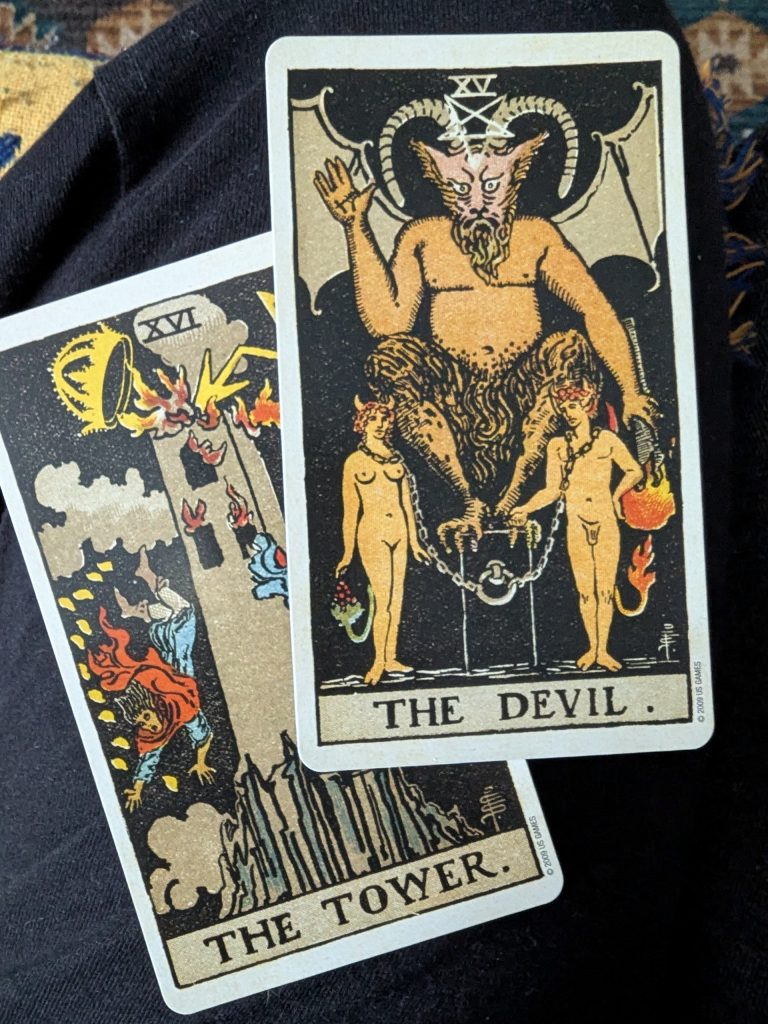
The Devil is the Guardian of the Threshold, and The Tower is the abyss that lies beyond.
Over the course of our lives, we walk through many thresholds. These are moments when everything changes. When my mom died, I instantly knew I was no longer in the same world. I felt similar feelings when I learned I was gay, when I came out, when my cat died, and when I cut off my toxic family. All of these moments (and many, many more) presented doors I could walk through, or not, but doing so meant I could never go back. I had to stay where I was, or dive into the experience.
The experience, though, is horrifying. How can I grapple with the reality that my mom used to be in that cold body over there? How can I make the choice to put my cat down? How can I accept my gayness? The realities are too horrifying to look in to. In fact, it feels as if accepting those realities will lead to my own annihilation. I prayed and prayed and prayed to be straight. I begged God to save me.
And that is The Devil. The Guardian.
The Guardian of the Threshold tells us that we will surely die if xyz happens. This Guardian manifests for me often as depression, telling me to cut off those around me in an effort to save them from how horrible I truly am. This Guardian tells me that if I allow myself to be vulnerable, if I let people into my shell, I will be destroyed. It says if I come out of it, I will be hated and killed. If I accept that my mom died, I have to also accept that my entire family structure has died. That part of my life is over, and never again will I live in a world where my mom is here with me. Never again can I not be gay.
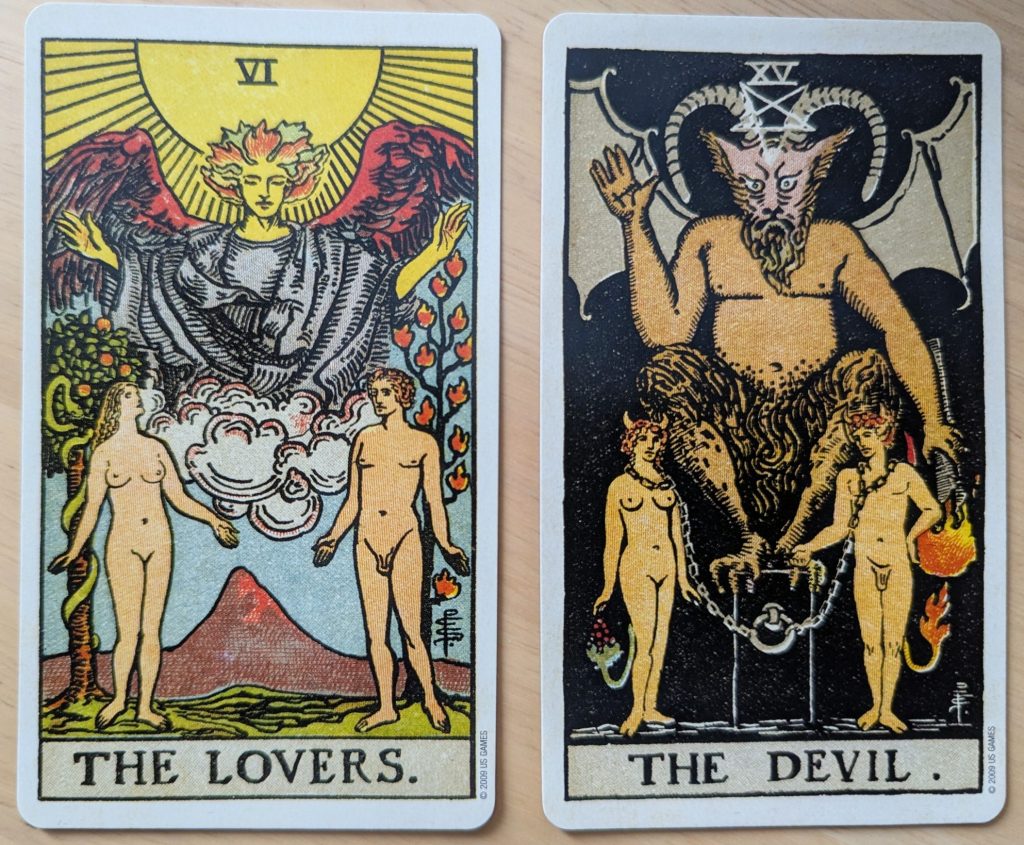
The Guardian wants us to maintain the status quo of our lives. He is a perversion of tarot key #6, The Lovers.
These are, in many ways, two sides of the same coin. In her song Ablaze from her 2020 album Such Pretty Forks in the Road, Alanis Morissette sings:
The first thing that you’ll notice is some separation from each other
Yes it’s a lie, we’ve been believing since time in memorial
There was an apple, there was a snake, there was division
There was a split, there was a conflict in the fabric of life
One became two and then everyone was out for themselves
Everyone was pitted against each other conflict ruled the realm
All our devotions and temperaments are pulled from different wells
They seem to easily forget we are made of the same cells
The Lovers speaks of that separation, discrimination. It’s about using our innate faculties to make the chaos around us make sense. The archangel rises from clouds and is backlit by a great yellow sun. These are all symbols of non-physical reality, as well as divine unity. The two human figures, and their associated symbols, represent the division Alanis sung about. The mountain in the background represents the path of unification, reintegration, or enlightenment that must be followed to understand the truth of oneness.
The Devil is the opposite. A distinctly worldly creature perches his talons on a partial cube. A full cube (seen as the seat that the High Priestess sits upon) represents all existence.
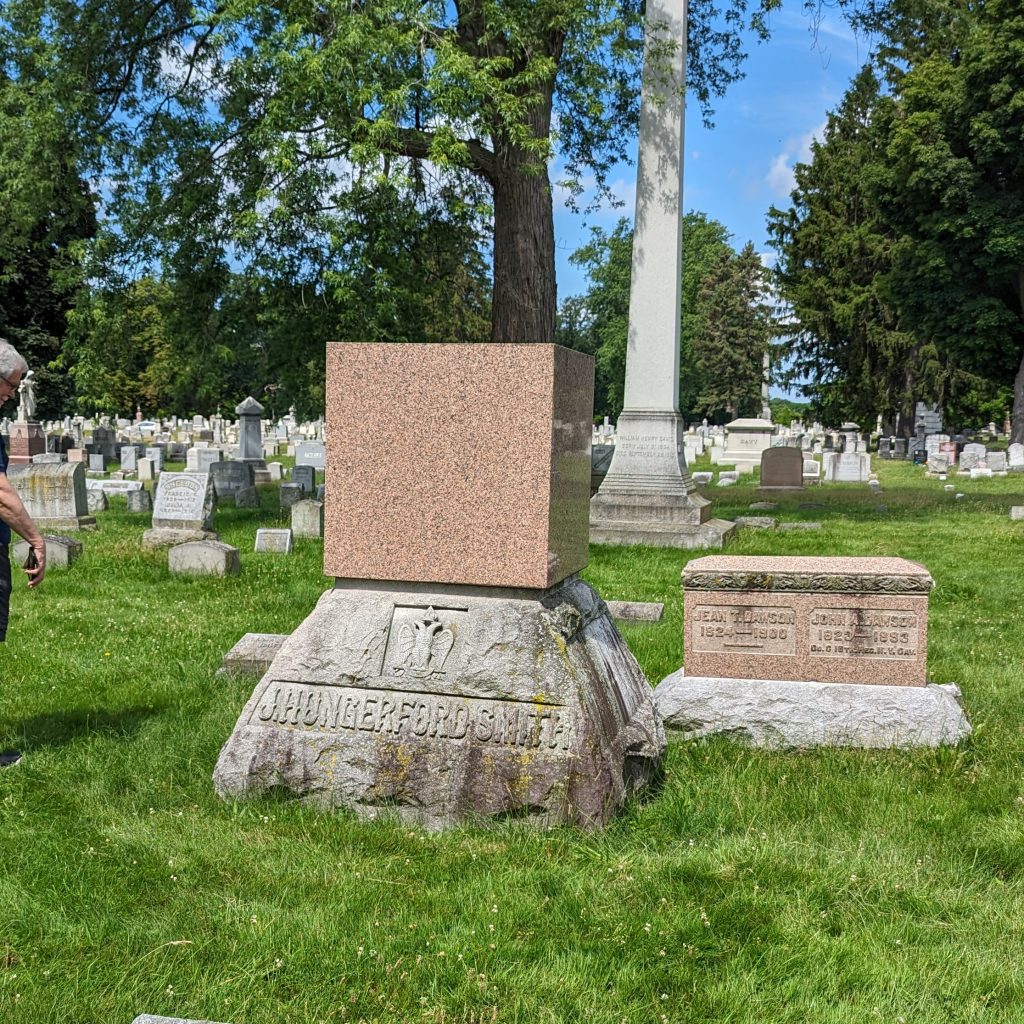
In the above photo, we see a cemetery monument featuring a cube, a symbol also utilized by Freemasonry, which means something similar to that fraternity. The process of spiritual and personal development is seen as shaping the rough stone (the bottom of the monument) into the perfect Universal Cube of God. Freemasonry teaches us that we are all sculptors, creating our own universe.
Half of a cube, then, is only a partial understanding of the universe. The Devil clutches this pedestal desperately, as if his existence depended on your misunderstanding of the world around you (!).
The Lovers are lit by a big, burning sun. They can see everything around them. They have the power to sculpt. These same figures find themselves in a different situation with The Devil, however. They are in complete and total darkness. The Devil, in fact, actively hides away the only light there is. He doesn’t invite the lovers to stay with him, but instead forces them into bondage with chains. On one card, their nakedness is beautiful and pure. On another it is degrading and embarrassing.
Tarot, of course, happens in sequence, hence, the cards are numbered. The Devil is followed immediately by The Tower.
How can we reconcile this? The Tower, obviously, represents destruction. Is The Devil trying to save us from that destruction? That is precisely what he wants you to think.
Isn’t it safer to stay here, in the dark? I mean, yeah, the chains suck, but it’s better than falling to my death out of that tower, jeez!
That is the siren call of The Devil, and his song draws so many of us to his feet.
The Tower is the abyss. It’s the unknown. The Devil promises us certainty (which we often misinterpret as safety), while The Tower promises our destruction.
Here, though, is one of the most essential occult truths I’ve learned:
‘No man ever steps in the same river twice, for it’s not the same river and he’s not the same man.’ – Heraclitus
Whether or not one subscribes to the tenants of Modern Spiritualism, their insistence that death doesn’t actually mean what we think is does speaks to this truth, in its own way. Spiritualists call it “the change called death.” On their monument in the city of their birth is inscribed: THERE IS NO DEATH. THERE ARE NO DEAD.
If death doesn’t mean the end, if it’s actually just a type of transformation, then what does The Tower promise? Doesn’t the destruction of The Tower represent the annihilation of the Self? Death?
The lightning doesn’t only hit the tower, it knocks loose the golden crown of ego from its summit.
The falling figures are surrounded by 22 yods. Yod is the tenth letter of the Hebrew alphabet, which consists of twenty-two letters. Yod means hand or arm, and is the smallest letter of the alphabet. It is the seed from which all other letters grow, and, because of its size, represents humility.
As I talked about briefly in another post, The Word, humans have the incredible ability to create the world around them by way of language. Because we have the ability to think in structured ways, because we have language to describe those ways of thinking, we are able to create order in chaos. We are able to sculpt our own cubes. We are able to create our own reality. The way we think informs our understanding of the world.
In The Lovers, we receive that ability. In The Devil, we misuse that ability to create darkness and despair. We use those twenty-two letters like bricks to protect ourselves and, before we know it, we’ve built an impenetrable tower around us, and, looking out from our high vantage point, we believe we have it all figured out. The golden crown of ego sits atop our creation telling us we’ve done right and that, finally, we can be still and certain and safe.
It is only when we slip the Devil’s chains over our head (notice how loose they are), it is only when the crown is knocked off, it is only when our Tower crumbles to the ground that are we free to, once again, pursue the path of Unity. It is only then that we can continue the journey of spiritual unfoldment, moving from The Tower, to The Star, and eventually to Judgement, and The World.
It is only when we leap into the unknown, without certainty that we will survive in the form we now recognize, that we can grow.
What happens when we achieve our sacred place within card 21, The World? We will, without a doubt, swing back around to the beginning of the cycle and start all over again. Enlightenment comes to us in degrees, and each threshold we encounter (and there are countless) gives us the opportunity to expand that much more.
We are already creating our own reality, and we are already in a state of constant flux. We never encounter the same river, for it is always different water. The idea that the river is somehow constant is a lie. It is, in itself, an illusion, that we have integrated into our realities utilizing our imperfect and partial understanding of actuality.
The Devil promises contained safety, but The Tower reminds us that we can’t stay in that dark room forever.
Later on in the album, in the song Nemesis, Alanis sings about the necessity of, and the terror of, the threshold:
Change, you are my nemesis
Transition, I hold my breath
This about-face, I’m excited
I’m excited yet I’m filled with despair, anticipation, and dread
This metamorphosis closed the door and opened a windowAnd now I am beyond recognition
I guess that’s a good thing
And still, I want to go deeper
Sources and Further Reading
The Tarot, A Key to the Wisdom of the Ages, Paul Foster Case
Introduction to Tarot and Tarot Fundamentals, Builders of the Adytum
The Psychology of Thresholds: Why We Fear Life’s Gateways
The Dweller on the Threshold, Harvey Spencer Lewis
Guardian of the Threshold, Wikipedia
Impermanence, Wikipedia